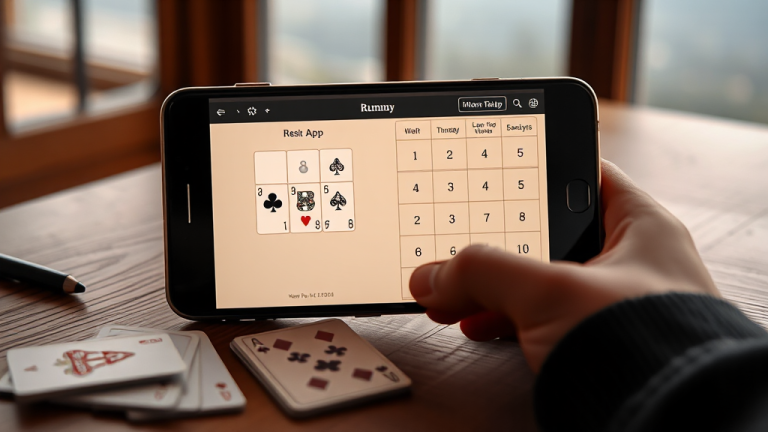
Online Rummy Game Requirements and Preparation Before You Start
If you are asking what you actually need before playing an Online Rummy Game for the first time, the short answer is this: a compatible smartphone or computer, a stable internet connection, a verified player account, a linked payment method, and a clear understanding of the rules and table limits. That is the whole checklist. Everything else — app ratings, welcome offers, withdrawal speeds — matters only after these basics are in place. As someone who moderates a community where the same questions come up every week, I can tell you that most beginner frustration comes from skipping one of these steps, not from bad luck at the table.
Below is the preparation process I walk new members through, in the order that avoids the most common mistakes.
Device, Connection, and Account Setup
The device question is simpler than people expect. Any reasonably modern Android phone, iPhone, tablet, or laptop with a current browser will run a rummy app or web client without trouble. What actually matters is memory and screen size. Rummy involves sorting cards into sets and sequences, and a cramped screen makes that harder. A phone with at least 3GB of RAM and a display of 5.5 inches or more is comfortable. Older budget devices may still work, but they can lag during animations, which is distracting when you are tracking discards.
Internet stability deserves more attention than raw speed. A 5 Mbps connection is plenty for card play, but a connection that drops for two seconds can cost you a turn. If you play on mobile data, check your signal before joining a table. If you play on Wi-Fi, avoid networks that require repeated logins or that throttle streaming. Wired or stable home Wi-Fi is the safest option for longer sessions.
Account setup is where preparation becomes formal. You will need a mobile number for OTP verification, a valid email address, and, for real-money play, identity documents for KYC. In India, most operators require a PAN card, and some ask for Aadhaar or a bank statement. Keep clear photos or PDFs of these ready before you start registration. Uploading them mid-signup on a slow connection is the single most common reason people abandon the process.
One more account-level detail: read the terms on age and location. Rummy rules vary by state, and operators restrict play in certain regions. Confirming eligibility before you deposit saves you from a locked account later.
Payments, Bonuses, and Understanding the Numbers
Money handling is the part that generates the most repeat questions in our community. The mechanics are straightforward once you separate three things: deposits, welcome offers, and withdrawals.
Deposits are usually instant through UPI, net banking, or wallets. Set a personal limit before you deposit anything. Decide what you are comfortable playing with for the month, and treat it as spent entertainment rather than an investment. This single habit prevents most of the complaints we see.
Welcome offers need careful reading. A bonus is rarely cash you can withdraw immediately. Most are structured as a percentage match on your deposit, released in stages as you play a required number of hands or reach a turnover threshold. Before claiming one, note the bonus amount, the playthrough requirement, the expiry date, and which game variants count toward it. If a term is unclear, the operator’s help section or support chat should clarify it before you opt in.
Withdrawals depend on KYC completion and the operator’s processing window. Typical timelines range from a few hours to a couple of days, and bank transfers may add another working day. Verify the minimum withdrawal amount and whether any fees apply. If you plan to compare operators on these points, a structured directory such as Rummy Lists is useful because it places welcome offers, payment details, and editorial ratings side by side instead of making you hunt through multiple help pages.
Finally, understand the table stakes. Rummy tables have minimum and maximum buy-ins. Beginners should start at the lowest stakes available, not because the cards are different, but because the cost of learning a new interface is lower. Move up only when the rules and controls feel automatic.
Rules, Etiquette, and a Sensible First Session
The rules of rummy are consistent in outline but vary in detail between formats. The two main versions are Points Rummy, a single-deal format where the winner takes the pot, and Pool Rummy, where players are eliminated after crossing a points limit. Deals Rummy sits between them with a fixed number of deals. Know which format you are joining before the first card is dealt, because strategy and risk differ.
Learn the basics cold: a valid declaration needs at least two sequences, one of which must be a pure sequence without a joker. A set is three or four cards of the same rank in different suits. A joker substitutes for a missing card in an impure sequence or set but cannot replace a card in a pure sequence. First drop, middle drop, and full drop have different point costs, and choosing the wrong one early in a bad hand is an avoidable loss.
Etiquette matters more than newcomers expect. Play at a steady pace. Do not stall deliberately when you are losing. Avoid table chat that pressures other players. In most communities, these habits are remembered longer than any single result.
For a first session, set a time limit as well as a money limit. Play one format until you understand its rhythm. Review your completed hands afterward, especially the ones you lost, and note whether the mistake was a rule misunderstanding or a strategic one. That review habit is what separates players who improve from those who keep repeating the same errors.
Preparation, in the end, is not about memorizing tricks. It is about removing friction — a verified account, a working payment method, a stable connection, and a clear grasp of the format — so that when you sit down, the only thing left to think about is the cards in your hand.
About the Author